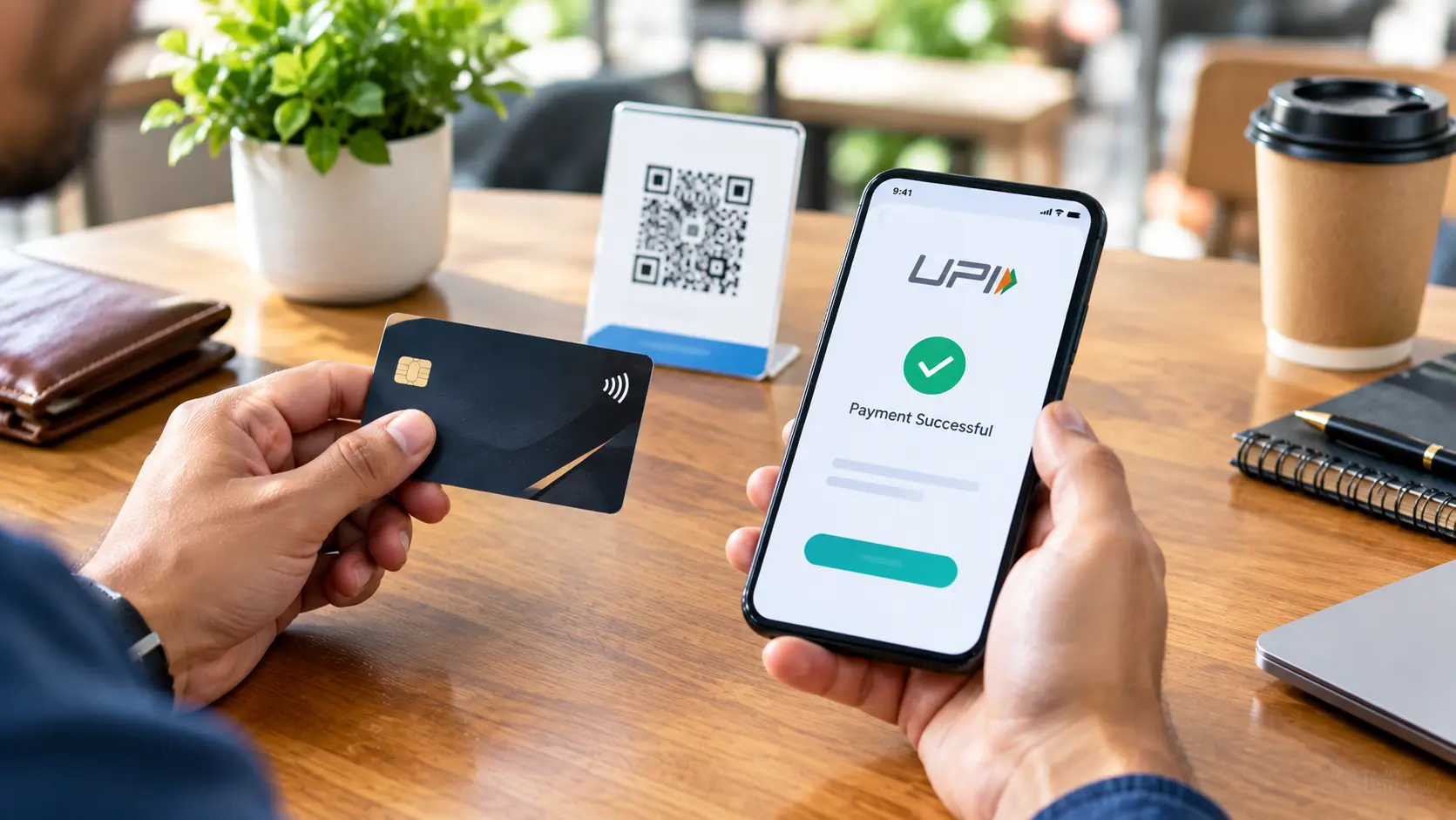
Quick answer: The best RuPay credit cards for UPI payments in 2026 are those that combine strong cashback on everyday UPI spends, low or waivable annual fees, and milestone-based rewards. Entry-level cashback cards suit first-time users, while premium RuPay cards reward high spenders with travel perks and accelerated points. Choosing the right one depends on your monthly UPI spending pattern and reward preferences.
RuPay credit cards have quietly become one of the most practical tools in an Indian consumer’s wallet. Once seen as a budget alternative to Visa and Mastercard, RuPay has grown into the backbone of India’s UPI-linked credit ecosystem — and that shift has changed how people think about everyday spending.
UPI itself needs little introduction. It has become the default way millions of Indians pay for groceries, transport, and dining out, thanks to its speed and near-universal merchant acceptance. What’s less well understood is that RuPay credit cards can now be linked directly to UPI, letting cardholders earn credit card rewards on transactions they’d otherwise make from a bank account or debit card.
With more banks issuing RuPay credit cards each year and reward structures constantly evolving, picking the right one for 2026 requires a clear understanding of what’s actually on offer. This guide breaks down how RuPay and UPI work together, what to look for in a card, and how to avoid common pitfalls when applying.
What Is RuPay and Why Does It Matter for UPI Users?
RuPay is India’s domestic card payment network, launched by the National Payments Corporation of India (NPCI) in 2012 as an alternative to global networks like Visa and Mastercard. Because RuPay is built and processed entirely within India, transaction data stays onshore, and processing costs for banks and merchants are typically lower.
That cost advantage matters more than it might seem. Lower merchant fees mean broader acceptance, including among small vendors and local shops that might otherwise avoid card payments altogether. RuPay’s biggest structural advantage, however, is its native integration with UPI: RuPay is the only card network currently permitted to link credit cards directly to a UPI ID for payments.
RuPay’s UPI integration is the single biggest reason it has grown so quickly since 2022, when NPCI first enabled credit card linking on UPI. This means a RuPay credit card can be scanned at any UPI QR code — the same ones used for debit card and bank transfers — while still earning credit card rewards.
How Do UPI Payments Actually Work?
UPI (Unified Payments Interface) is a real-time payment system developed by NPCI that allows instant money transfers between bank accounts using a mobile app. Instead of entering account numbers or card details, users pay through a UPI ID, QR code, or phone number.
For consumers, UPI’s appeal is straightforward: it’s fast, free at the point of transaction for bank-to-bank transfers, and works across nearly every merchant, from street vendors to large retailers. For merchants, UPI reduces the need for cash handling and settles funds quickly.
Security is built into the system by design. Every UPI transaction requires a UPI PIN, and most apps layer on device-level authentication and transaction limits. When a RuPay credit card is linked, the same PIN-based authentication applies, so the payment flow feels identical to a regular UPI transfer — the difference is that the money is drawn from your credit line rather than your bank balance.
What Are the Best Types of RuPay Credit Cards for UPI Payments in 2026?
Rather than chasing a single “best” card, it’s more useful to match a RuPay card type to your spending habits. Here are the main categories worth considering in 2026.
Entry-Level Cashback RuPay Cards
These cards are designed for first-time credit card users or those with moderate monthly spending. They typically offer flat-rate cashback on UPI transactions, no or low joining fees, and simple reward redemption. They’re a sensible starting point if you’re mainly using UPI for groceries, utility bills, and small daily purchases.
Mid-Tier Rewards RuPay Cards
Aimed at consumers with steady monthly spending across categories like dining, shopping, and travel, mid-tier RuPay cards usually offer tiered reward points, occasional bonus categories, and moderate annual fees that are often waived after a spending threshold. These cards work well for households managing multiple recurring UPI payments.
Co-Branded Shopping RuPay Cards
Issued in partnership with e-commerce platforms or retail chains, co-branded RuPay cards offer accelerated rewards when used on the partner platform, alongside standard UPI benefits elsewhere. If a large share of your spending goes to one particular retailer or platform, this category can offer outsized value.
Fuel and Bill Payment RuPay Cards
These cards focus on surcharge waivers and cashback specifically on fuel purchases and utility bill payments made via UPI. They suit users whose monthly UPI activity is concentrated on recurring, essential expenses.
Premium and Super-Premium RuPay Cards
Built for higher spenders, premium RuPay cards typically include milestone-based rewards, airport lounge access, and elevated reward rates once monthly or annual spending crosses a set threshold. Annual fees are higher, but they’re usually justified for cardholders who consistently spend well above average.
How Do These RuPay Card Categories Compare?
| Card Type | Best For | Reward Style | Annual Fee Range | Ideal Monthly UPI Spend |
|---|---|---|---|---|
| Entry-Level Cashback | New credit users | Flat cashback | None to low | Low |
| Mid-Tier Rewards | Everyday households | Tiered points | Low to moderate, often waivable | Moderate |
| Co-Branded Shopping | Platform loyalists | Accelerated points on partner brand | Low to moderate | Moderate to high |
| Fuel & Bill Payment | Commuters, bill payers | Surcharge waivers, category cashback | Low | Moderate |
| Premium/Super-Premium | High spenders | Milestone-based rewards, travel perks | High | High |
Because fee structures and reward rates change frequently, always confirm current terms directly with the issuing bank before applying.
What Features Should You Look for in a RuPay Credit Card?
Choose a RuPay card based on which of these features align most closely with your spending habits:
- Cashback on UPI transactions: Look for cards that explicitly reward UPI spending, not just point-of-sale swipes, since RuPay’s UPI linkage is its core differentiator.
- Contactless payment support: Most RuPay cards now support NFC-based contactless payments alongside UPI, useful for quick in-store transactions.
- Milestone-based rewards: Many cards offer bonus points or vouchers once you cross a quarterly or annual spending threshold.
- Bonus points for digital transactions: Some issuers offer extra rewards specifically for UPI or app-based payments over physical card swipes.
- Fee waivers: Choose a card with an annual fee waiver tied to a realistic spending target, so you’re not paying for benefits you won’t use.
How Can You Maximize RuPay Credit Card Benefits for UPI Payments?
Getting the most out of a RuPay card requires a bit of planning rather than passive use.
Concentrate recurring payments on your card. Linking utility bills, subscriptions, and grocery UPI payments to your RuPay card, rather than splitting them across debit and credit, helps you hit cashback and milestone thresholds faster.
Track redemption windows. Reward points and cashback often come with expiry dates. Set a calendar reminder each quarter to redeem before points lapse.
Time larger purchases around bonus periods. If your card offers seasonal or festival-linked bonus categories, plan bigger UPI payments — like annual insurance premiums — around those windows.
Combine card rewards with merchant offers. Many merchants run their own UPI-linked discounts. Stacking these with your card’s cashback can meaningfully increase savings on the same transaction.
How Secure Are RuPay Credit Cards for UPI Transactions?
Security is one of RuPay’s stronger selling points, since it operates under NPCI’s domestic infrastructure and is subject to Reserve Bank of India (RBI) guidelines.
Every UPI transaction made with a RuPay credit card requires two-factor authentication: the UPI PIN plus device-level verification through your registered mobile number. Transaction limits set by your bank add another layer of protection against large unauthorized transfers.
If your RuPay card or UPI PIN is compromised, the first step is to freeze the card immediately through your bank’s app or customer care line, then report the incident to file a formal dispute. Most issuers also offer zero-liability protection for fraudulent transactions reported within a specified window, so timely reporting matters.
Basic precautions go a long way: never share your UPI PIN or OTP, avoid scanning QR codes from unverified sources, and regularly review your transaction history for unfamiliar charges.
Who Is Eligible for a RuPay Credit Card, and How Do You Apply?
Eligibility varies by issuer, but most banks require a minimum age of 21, a stable income source, and a reasonable credit score, typically above 700 for better approval odds. Entry-level cards may have more relaxed criteria, while premium cards often require higher income thresholds.
The application process is largely digital. Most banks allow you to apply through their website or mobile app, upload KYC documents such as PAN and Aadhaar, and complete income verification online. Offline applications remain available through bank branches for those who prefer in-person processing.
Approval timelines typically range from a few days to about two weeks, depending on the bank’s verification process and how quickly supporting documents are submitted. Once approved, activating the card for UPI usually involves linking it within your UPI app of choice and setting a UPI PIN.
What Mistakes Should You Avoid When Choosing a RuPay Credit Card?
Even a well-chosen RuPay card can turn costly if used carelessly. Watch for these common mistakes:
- Overspending to chase rewards: Cashback and points are only valuable if they don’t lead to spending beyond your budget.
- Missing redemption deadlines: Unused points that expire are effectively wasted rewards.
- Skipping card comparisons: Applying for the first card offered by your bank, without comparing alternatives, often means missing a better fit for your spending pattern.
- Overlooking fees: Annual fees, late payment charges, and foreign transaction fees can quietly erode the value of your rewards if left unchecked.
Choosing the Right RuPay Credit Card for Your UPI Spending
There’s no single best RuPay credit card for everyone in 2026 — the right choice depends on how you spend. Occasional UPI users focused on daily essentials are usually better served by an entry-level cashback card with no annual fee, while households with steady monthly spending across categories may get more value from a mid-tier rewards card. Frequent shoppers on a specific platform should consider a co-branded option, and high spenders who travel often will likely find premium cards worth their higher fees.
Before applying, compare at least three cards side by side, check the fine print on fee waivers, and confirm UPI-linking is supported through your preferred payment app. Once you’ve matched a card to your spending pattern, the process of applying and linking it to UPI takes only a few minutes — and from there, every UPI payment starts working a little harder for you.
Frequently Asked Questions
Is a RuPay credit card better than a Visa or Mastercard credit card for UPI payments?
RuPay is currently the only card network that supports direct linking to UPI for payments, so if UPI-based spending is a priority, RuPay is the practical choice regardless of comparative rewards on other networks.
How much does it cost to get a RuPay credit card?
Costs vary widely by issuer and card tier, ranging from no joining or annual fee on entry-level cards to higher fees on premium cards, which are often waived after meeting an annual spending threshold.
Can I use any UPI app with a RuPay credit card?
Most major UPI apps support RuPay credit card linking, but availability can vary by bank and app, so it’s worth confirming compatibility before applying.
What happens if I miss a payment on my RuPay credit card?
Missing a payment typically results in late payment fees and interest charges on the outstanding balance, and can negatively affect your credit score if reported to credit bureaus.
Are there alternatives to RuPay credit cards for UPI-style payments?
Debit cards and direct bank transfers remain the primary alternative for UPI payments, though they don’t offer the credit line or reward structures available through RuPay credit cards.